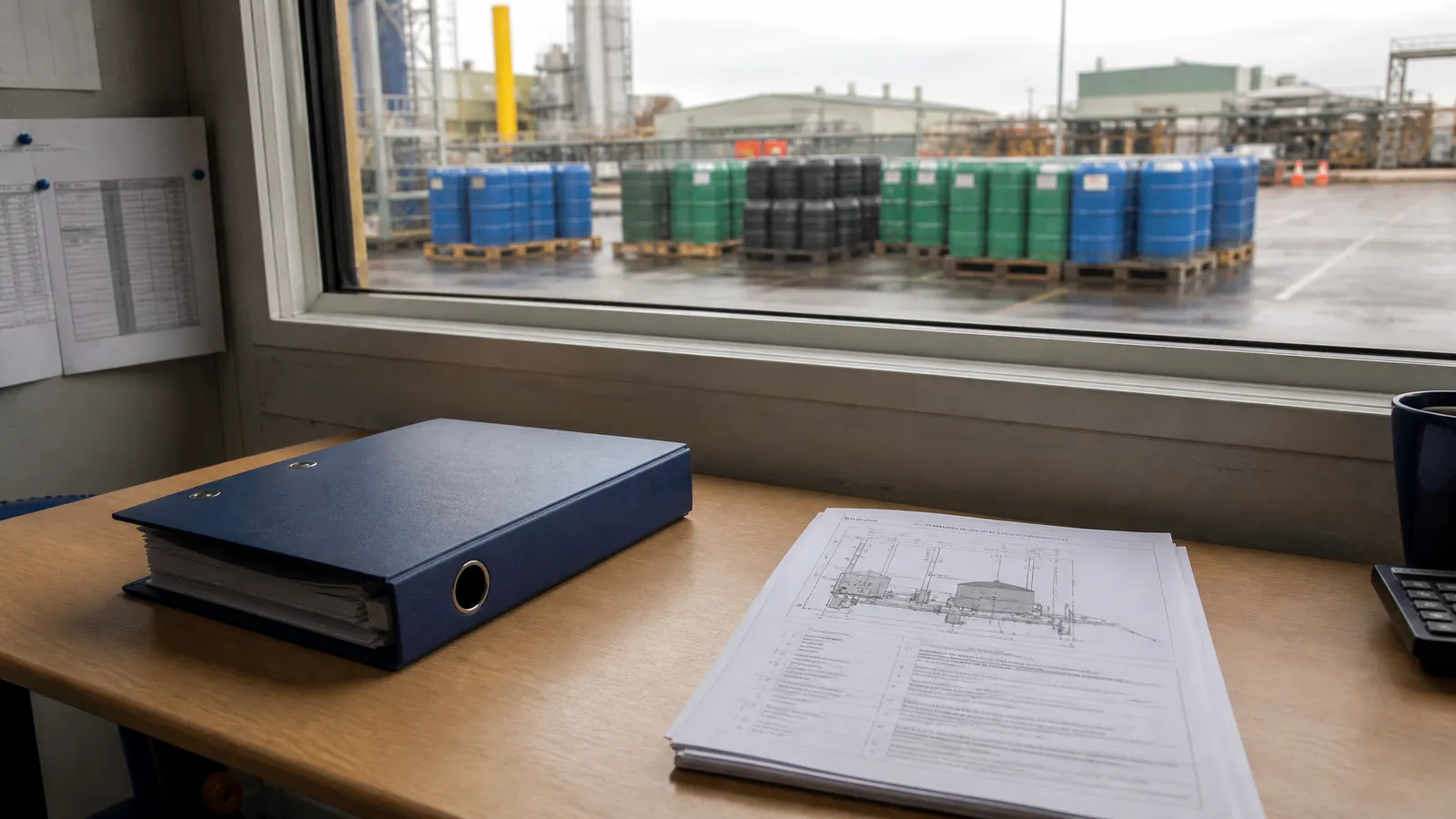
WM3 is the technical guidance used in Great Britain to assess whether a waste is hazardous and to assign it the correct waste classification code. Its full title is Technical Guidance WM3: Waste Classification, Guidance on the classification and assessment of waste. This guide explains what WM3 is, who publishes it, where it applies, how it is organised and how it fits with a waste producer's legal duty to classify waste.
What is WM3?
The Environment Agency publishes WM3 on GOV.UK as waste classification technical guidance. The publication page describes it as a comprehensive reference manual for anyone involved in producing, managing and regulating waste. It is a long technical document, issued as a 180 page PDF with the reference LIT 10121.
GOV.UK is clear about who the guidance is written for. To use every part of it fully, a reader needs to be competent in hazardous waste and have some knowledge of chemistry. GOV.UK separately publishes shorter summary guidance on how to classify common types of waste.
What WM3 does not cover
The publication page notes that WM3 does not give guidance on the packaging and labelling of waste for transport. Those rules come from dangerous goods law, which our guide on what ADR is explains.
Who publishes WM3 and where it applies
Although the guidance is hosted by the Environment Agency, the document lists three publishing organisations: the Environment Agency, Natural Resources Wales (Cyfoeth Naturiol Cymru) and the Scottish Environment Protection Agency (SEPA).
The GB version applies to anyone who produces, manages or regulates waste in England, Scotland or Wales. Anyone in Northern Ireland is directed to a separate Northern Ireland version of the guidance instead.
A short history of WM3
The document history and the GOV.UK change notes trace how WM3 developed:
- WM3 was adapted from the third edition of an earlier guidance document, WM2
- the first edition of WM3 was published in May 2015 and replaced WM2 in England from 1 July 2015
- a 2018 revision updated Appendix C
- a January 2021 update reflected changes to chemicals legislation following EU Exit
- an October 2021 update to Appendix B dealt with substances that have specific entries under the GB CLP (Classification, Labelling and Packaging) Regulation's Mandatory Classification List
What WM3 is used for
WM3 has two closely linked jobs. It explains how to work out whether a waste displays a hazardous property, and it explains how to classify the waste and assign the right code. For most wastes, the holder needs to identify whether the waste has a hazardous property before it can be classified or described.
The codes in question come from the List of Waste (LoW), also called EWC (European Waste Catalogue) codes. The List of Waste is a catalogue of all wastes divided into 20 chapters, each code having a description. Appendix A of WM3 contains a copy of the list.
Some List of Waste entries are always hazardous, some are always non-hazardous, and some, known as mirror entries, depend on what the waste contains. WM3 explains how each type is assessed. Waste codes and mirror entries are subjects in their own right, so this article touches on them only briefly.
How WM3 is structured
WM3 is organised into three chapters and four appendices. The introduction summarises them as follows:
- Chapter 1, Introduction
- Chapter 2, Waste classification and assessment, which sets out the general procedure
- Chapter 3, Further guidance on assessment, with examples covering asbestos, oil and coal tar containing wastes and soil
- Appendix A, How to use the List of Waste
- Appendix B, Hazardous substances, which explains how to identify whether a substance in a waste is a hazardous substance
- Appendix C, Hazardous property assessment, covering the hazardous properties numbered HP 1 to HP 15 and wastes that are hazardous because they contain persistent organic pollutants (POPs)
- Appendix D, Waste sampling, on planning sampling so that a classification is accurate
The procedure in Chapter 2 moves from checking whether a material needs classifying at all, through identifying possible codes and the assessment each one needs, to establishing the composition of the waste and assessing its hazardous properties, before a code is assigned. The procedure is a general guide to be used with the supporting appendices, and it suggests seeking advice from a competent person in cases of doubt.
WM3 and the producer's duty to classify waste
WM3 opens by placing classification within the waste duty of care: as part of that duty, a business has to classify the waste it produces. GOV.UK's guidance on classifying different types of waste states that businesses must classify the waste they produce before it is collected, disposed of or recovered. The same guidance gives the reasons, including checking whether the waste is hazardous, making sure only an authorised organisation takes it and filling in waste paperwork correctly.
That paperwork has to include the waste classification code and say whether the waste is hazardous or POPs waste. WM3 is the source of more detailed information on classification and assessment, and the manufacturer's Safety Data Sheet (SDS) is a source of information on what a product contains. Landfill waste acceptance criteria (WAC) results cannot be used for waste classification.
In most cases the waste code or codes associated with a waste show whether it is hazardous or POPs waste. Some waste items, however, have more than one possible classification depending on the mix of substances in them. Where waste is a mixture, such as liquid waste from a process or a collection of part used reagents from laboratory waste disposal, WM3 sets out how its composition and hazardous properties are assessed.
Waste of unknown composition
All reasonable efforts are expected to be made to find out the composition of a waste, because that information is needed for classification and for the consignment note. Where the composition of a mirror entry waste genuinely cannot be determined, the waste has to be classified as hazardous.
We cannot accept unidentified chemicals. The customer describes the waste to our team, our team reviews it, testing is arranged only if needed and agreed with the customer, and then a collection is arranged. If you are unsure how WM3 applies to a waste you hold, speak to our team. Our guide to what hazardous waste is gives more background on how hazardous waste is defined.
To discuss your waste, contact our team on 0845 366 9306 or email enquire@hazardousdisposal.co.uk.
This article is for general information only and does not constitute professional, legal or chemical advice. Waste producers are legally responsible for correctly classifying their waste. For guidance on your specific waste, please contact our team.