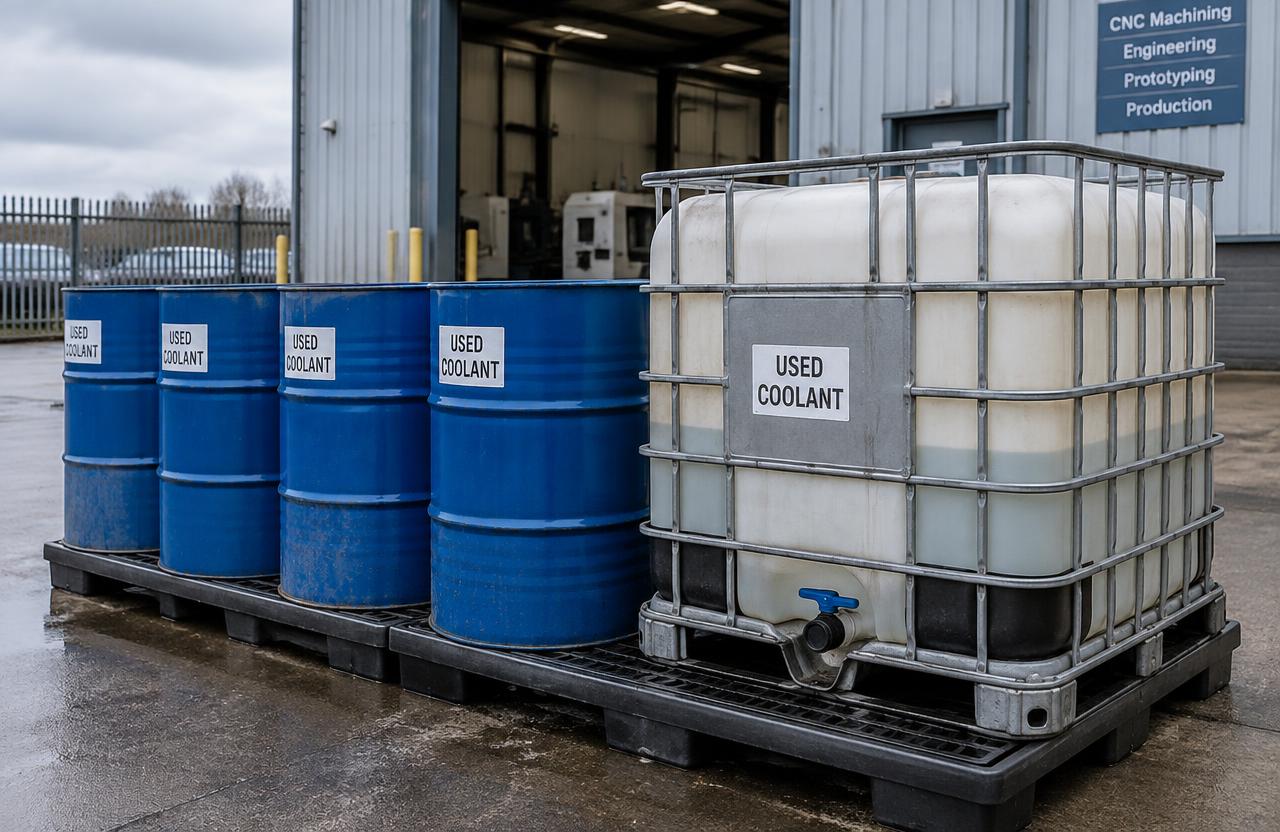
Coolant Disposal
Engine coolant, machine coolant, soluble oil and cutting fluid collected from engineering, fleet and manufacturing sites.
How our coolant disposal service works
Waste coolant is often a mix of water, glycol, additives, metal fines, tramp oil and process contamination. It should be kept separate from waste oil and stored away from drains.
We collect coolant in drums, IBCs, sumps and tanks, with tanker support available for larger volumes or planned machine clean-outs.
The destination site decides the suitable disposal process from the analysis and contamination profile.
We collect the waste as a licensed waste carrier, using ADR drivers where required, and take it to a licensed disposal site operating under the appropriate permit or exemption.
Waste streams covered by this service
- Engine coolant
- Machine coolant
- Cutting fluid
- Soluble oil
- Glycol mixtures
- Sump clean-out liquids
Request a quote for coolant disposal
Send the waste type, quantity, full collection address and photographs. We will confirm the collection plan and timing.
Safe collection starts with the right information
Chemical waste can create fire, fume, corrosion, reaction and water pollution risks when it is badly stored or moved through the wrong route.
Protects your people
Compatible containers, clear labels and trained handling reduce exposure and reaction risks before collection.
Compliance
We provide the relevant collection paperwork and digital hazardous waste consignment notes for your records.
Prioritises recovery
We prioritise the recovery and recycling of materials where possible.
Coolant disposal FAQs
Common questions for commercial and industrial sites. If your stream is unusual, call 0845 366 9306 for advice.
Do you collect waste coolant from small sites?
Yes. Coolant disposal is available for small producers as well as multi-site operators. We can collect single drums, boxed small containers, pallets, IBCs or bulk liquids where access allows.
What paperwork comes with coolant disposal?
The relevant collection paperwork is prepared and provided for your records, including HWCNs.
Can you advise on the correct waste code?
Our team reviews labels, safety data sheets, container condition and the process that produced the waste so we can arrange the right collection and destination site.
Do containers need to be labelled before collection?
Containers should be closed, sound and labelled with the contents where known. If labels are missing or damaged, send photographs and we will advise before the vehicle is booked.
How quickly can you collect?
Most collections are planned within a few working days after the quote is accepted. Urgent removals can be arranged where the waste and collection requirements allow.
Need a chemical waste collection?
Send the waste details, quantity, full collection address and photographs. We will confirm the collection plan and price before booking.