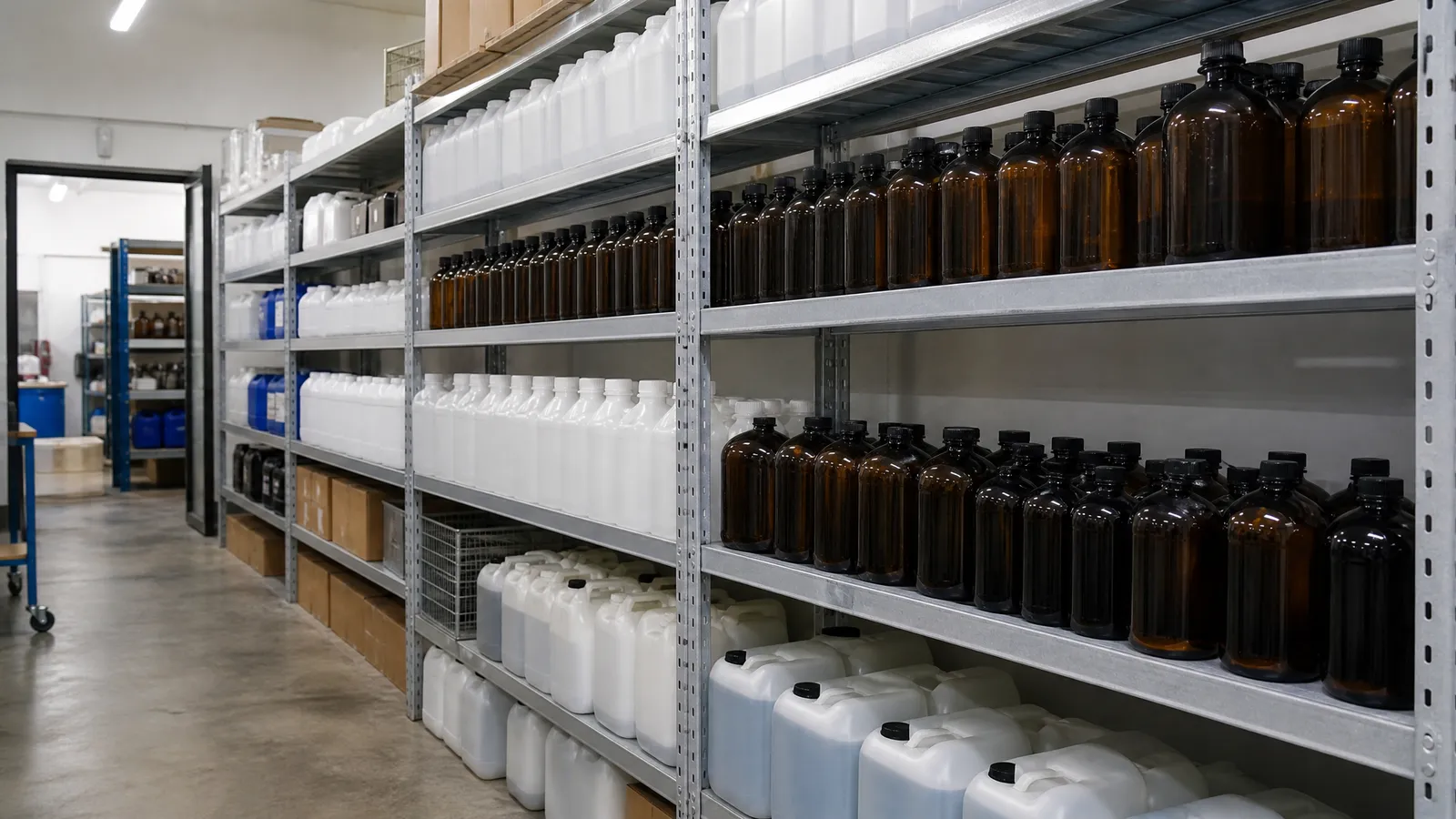
Hazardous substances are chemicals, mixtures and other materials that have the potential to cause harm to people or the environment. That harm might come from a physical property such as flammability, a health effect such as skin irritation or cancer, or damage to the environment. This guide explains how hazardous substances are defined and identified in Great Britain, gives examples of the main types and sets out how a hazardous substance differs from hazardous waste.
What are hazardous substances?
The Health and Safety Executive (HSE) describes a substance hazardous to health as a substance or mixture with the potential to cause harm if it is inhaled, ingested, comes into contact with the skin or is absorbed through it.
Hazard and risk are not the same thing, a distinction drawn clearly in the guidance on chemical classification. Hazard is the potential for something to cause harm. Risk is the chance, high or low, of someone or the environment actually being harmed, and how serious that harm could be.
Hazardous substances in workplace law
In the workplace, the main health and safety law on hazardous substances is the Control of Substances Hazardous to Health Regulations 2002. Our guide on what COSHH is explains those regulations and their legal definition. This article looks at the wider picture: how chemicals are classified and labelled, and where waste law comes in.
How hazardous substances are classified
Chemicals supplied in Great Britain are classified under the GB CLP Regulation. CLP stands for Classification, Labelling and Packaging. HSE's page on the GB CLP Regulation explains that it adopts the United Nations Globally Harmonized System (GHS) for classifying and labelling chemicals, and that HSE is the GB CLP Agency. Substances and mixtures placed on the market in Northern Ireland are subject to the EU CLP Regulation instead.
Classification is a scientific evaluation of whether a chemical can cause harm, for example whether it could cause cancer, explode or irritate the eyes. Classification identifies intrinsic hazards. It provides the information needed for decisions about risk control, so that chemicals can be produced, supplied, transported, used and disposed of safely.
Who classifies chemicals?
Classification is the responsibility of chemical suppliers, such as manufacturers, importers, downstream users and distributors. Suppliers assess chemicals against internationally agreed criteria. Classification has to be carried out whatever the tonnage, volume or amount of chemical being supplied.
Types of hazardous substance
HSE groups the classification criteria into three broad families:
- physical hazards, for example explosivity and flammability
- health hazards, for example the potential to cause cancer or to irritate the skin or eyes
- environmental hazards, for example harm to the aquatic environment
The GB CLP hazard pictograms give a useful picture of the main hazard types. They are explosive, flammable, oxidising, corrosive, acute toxicity, hazardous to the environment, health hazard or hazardous to the ozone layer, serious health hazard, and gas under pressure.
Everyday workplace examples of where harmful substances can be found range from paints and cleaners to flour dust, solder fume, blood and waste. Substances hazardous to health can also take the form of dusts, fumes, vapours, mists, gases and biological agents. Solvents and paints are frequent examples in workshops and on construction sites, which is why they appear alongside solvent disposal and paint disposal.
How hazardous substances are identified
Hazard labels
Where a supplier concludes that a chemical could cause harm, they are expected to provide this information on the label. A hazard label is made up of pictograms and written warnings, which are set out in law. The GB CLP pictograms are diamond shaped with a red border and a white background, and one chemical can carry more than one.
Hazard statements and signal words
Labels also carry hazard statements, which are phrases describing the nature of the hazard, such as "toxic if swallowed" or "causes serious eye damage". Precautionary statements describe measures to reduce or prevent harm from use or disposal. The signal word "Danger" is used for more severe hazards and "Warning" for less severe ones.
Safety Data Sheets
A Safety Data Sheet (SDS) is required by UK REACH, the regulation on the registration, evaluation, authorisation and restriction of chemicals. An SDS is needed when a hazardous chemical is supplied for use at work, and also when a chemical that is not classified as hazardous contains small amounts of a hazardous substance. The SDS describes the hazards of the product. Information on handling, storage and emergency measures for a particular product is found on its SDS, and in an emergency the emergency services are the first contact.
Hazardous substances and hazardous waste: the difference
A hazardous substance and hazardous waste are related but separate ideas, covered by different areas of law. CLP and COSHH deal with chemicals as products that are supplied and used at work. Waste law deals with what happens once a material is discarded.
GOV.UK's guide to hazardous waste explains that waste is generally considered hazardous if it, or the materials or substances it contains, are harmful to humans or the environment. Its examples include chemicals such as brake fluid or print toner, solvents, pesticides, non-edible oils, batteries and hazardous waste containers.
The label on the original product is only part of the picture. Waste has to be classified in its own right and described with a List of Waste code, often called an EWC (European Waste Catalogue) code. Some waste items have more than one possible classification, depending on the mix of substances in them, and in those cases the producer has to work out what is in the waste and how much of it is hazardous. Many products carry hazard pictograms, while some, such as cosmetics and medicines, are not normally labelled with hazard symbols, and points to the product's SDS for information on its contents. Our guide to what hazardous waste is explains this in more detail.
Laboratories are a good example of how the two overlap. A single site can hold many small containers of different hazardous substances, each of which becomes a waste to be classified once it is no longer needed. This is one reason laboratory waste disposal draws on both product information and waste rules.
To discuss your waste, contact our team on 0845 366 9306 or email enquire@hazardousdisposal.co.uk.
This article is for general information only and does not constitute professional, legal or chemical advice. Waste producers are legally responsible for correctly classifying their waste. For guidance on your specific waste, please contact our team.