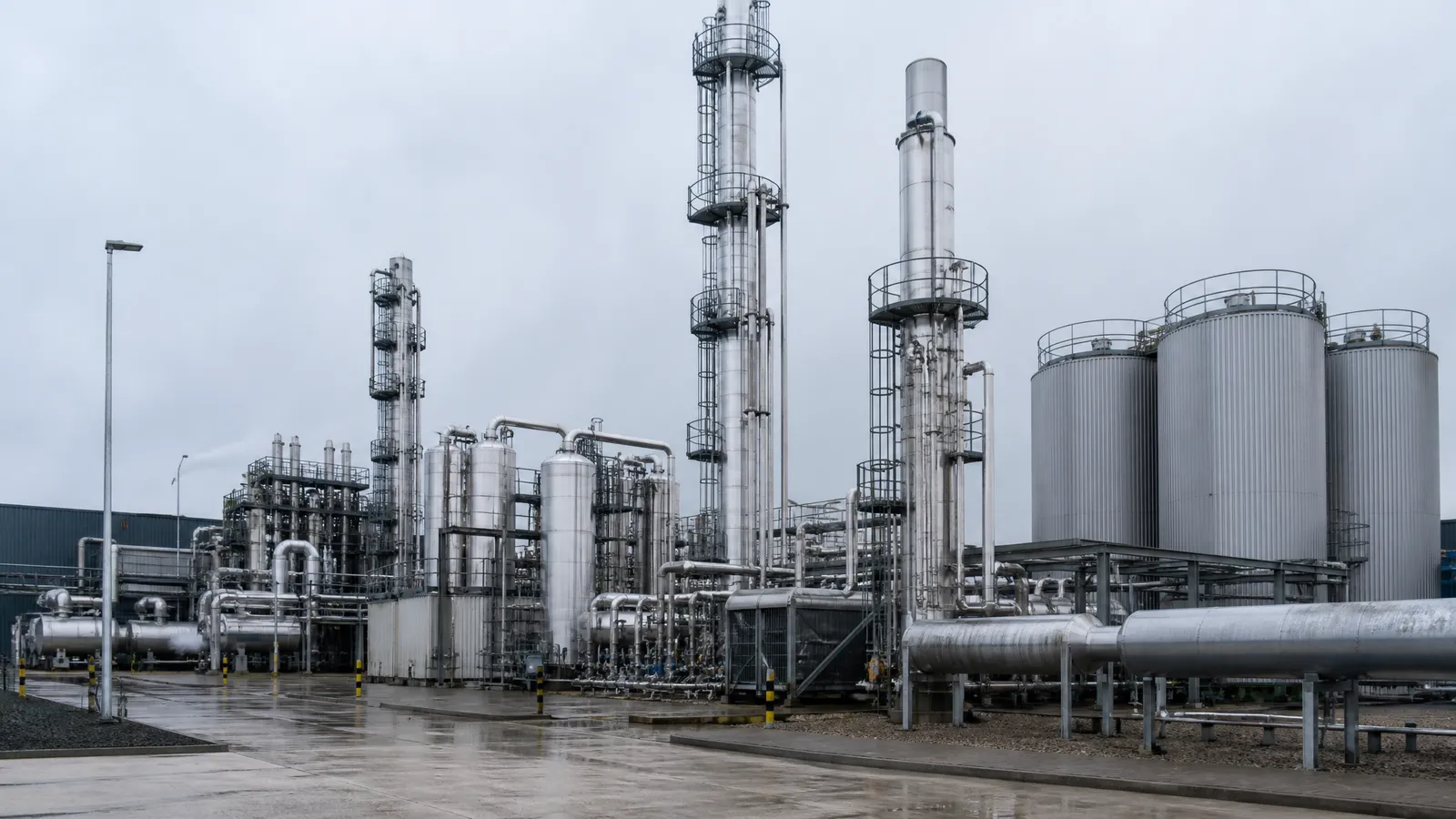
Solvent recovery is the process of taking used or waste solvents and reprocessing them so they can be used again. In most cases this is done by distillation, which separates the solvent from the contaminants picked up during use. Government guidance treats recovering waste solvents in this way as recycling, and places it high in the waste hierarchy. This guide explains what solvent recovery means, how it fits into waste law and the rules that apply to the facilities that carry it out. It is written for businesses that produce or hold waste solvents.
What solvent recovery means
Once a solvent has been used and is discarded, it becomes waste. Solvent recovery turns that waste back into a usable solvent rather than destroying it or using it as a fuel.
Defra's guidance on applying the waste hierarchy to hazardous waste covers organic solvents in some detail. It explains that waste solvents can be recycled to make a non-waste solvent, as long as that solvent is not used as a fuel, and that this is usually and readily achieved through distillation processes.
The concentration of the desired solvent in many solvent wastes is often above 80%, because of the nature of the processes that produce them. Chlorinated solvents are usually recovered using techniques consistent with those used for non-chlorinated solvents.
Recovery and recycling in waste law
Waste law uses more precise terms than "solvent recovery". The Defra guidance takes its definitions from Article 3 of the revised Waste Framework Directive:
- recycling means any recovery operation by which waste materials are reprocessed into products, materials or substances, for the original or other purposes, but not energy recovery or reprocessing into fuels
- recovery means any operation where the main result is waste serving a useful purpose by replacing other materials that would otherwise have been used
So distilling a waste solvent back into a solvent counts as recycling. Blending waste solvents into a fuel is a form of recovery, but not recycling.
The list of recovery operations in Annex II of the Waste Framework Directive, published on legislation.gov.uk, includes a specific code for this activity: R2, solvent reclamation and regeneration. R1, use principally as a fuel or other means to generate energy, is listed separately.
Where solvent recovery sits in the waste hierarchy
The waste hierarchy ranks waste management options by what is best for the environment. Prevention comes first, followed by preparing for re-use, recycling, other recovery and, last of all, disposal. This section looks at how it applies to solvents.
The Defra hazardous waste guidance works through each step for organic solvents:
- Prevention: some organic solvents could be replaced by aqueous-based materials, weighed against the efficiency and recovery potential of the organic solvent
- Preparing for re-use: simple cleaning, washing or filtration is not generally capable of returning a solvent to its original purity and quality, so this option is limited
- Recycling: where a waste organic solvent can be recycled by distillation, the guidance says this process should be performed
- Other recovery: energy recovery can be an option for highly contaminated solvents or chlorinated materials that cannot be distilled to product specification, for example blending solvents with other organic materials to a fuel specification for use in cement manufacture
- Disposal: the guidance states that organic solvents cannot be landfilled, and that thermal destruction without energy recovery, chemical treatment or biological treatment may be needed in some cases
The guidance concludes that recycling will generally be the most desirable option for most waste solvents. Other recovery or disposal may sometimes be justified, for example where the solvent is contaminated or the nature of the material rules out recycling.
Why recycling solvents is preferred
The Defra guidance lists several advantages of recycling organic solvents over other recovery or disposal. Recycling can help to make the most efficient use of raw materials, reduces the use of virgin materials, reduces use and emissions of volatile organic compounds (VOCs), and keeps solvents within the REACH chemicals regulations.
The guidance was produced under regulation 15 of the Waste (England and Wales) Regulations 2011. Anyone subject to the waste hierarchy duty in regulation 12 of those regulations must have regard to it.
The regulatory context
Permits for waste treatment
Recovering waste solvents is a waste treatment activity. GOV.UK's guidance on waste environmental permits explains that a business may need an environmental permit from the Environment Agency if it uses, recycles, treats, stores or disposes of waste. Depending on the activity, the requirement may be met through a bespoke permit, a standard rules permit, a registered exemption or a regulatory position statement.
The Environment Agency's guidance on appropriate measures for permitted chemical waste facilities applies to sites with an environmental permit to treat or transfer chemical waste. It lists distillation among the physical treatment processes that operators describe in their treatment details.
Classification still applies
Waste solvents are classified like any other waste. Defra's guidance lists examples of relevant List of Waste codes, also called EWC codes, such as 14 06 03* (other solvents and solvent mixtures) and 20 01 13* (solvents). The producer's duty to classify and describe the waste applies before it goes for recovery.
End of waste
A recovered solvent is not automatically free of waste controls. GOV.UK's guidance on how to check if your material is waste explains that a material must have been through a recycling or other recovery operation and meet all the conditions of the end of waste test to be classed as non-waste. The test has four conditions:
- the material is to be used for specific purposes
- a market or demand exists for it
- it meets the technical requirements for those purposes and the legislation and standards that apply to products
- its use will not lead to overall adverse effects on the environment or human health
Once a material is classed as non-waste, waste controls no longer apply to it. Where it is not clear that all the conditions are met, the guidance calls for a precautionary approach.
Solvent recovery and your waste
Our pages on solvent disposal and acetone waste disposal explain how we collect these wastes. Whether a particular solvent waste is suitable for recycling depends on what it contains, so if you are unsure, speak to our team.
To discuss your waste, contact our team on 0845 366 9306 or email enquire@hazardousdisposal.co.uk.
This article is for general information only and does not constitute professional, legal or chemical advice. Waste producers are legally responsible for correctly classifying their waste. For guidance on your specific waste, please contact our team.