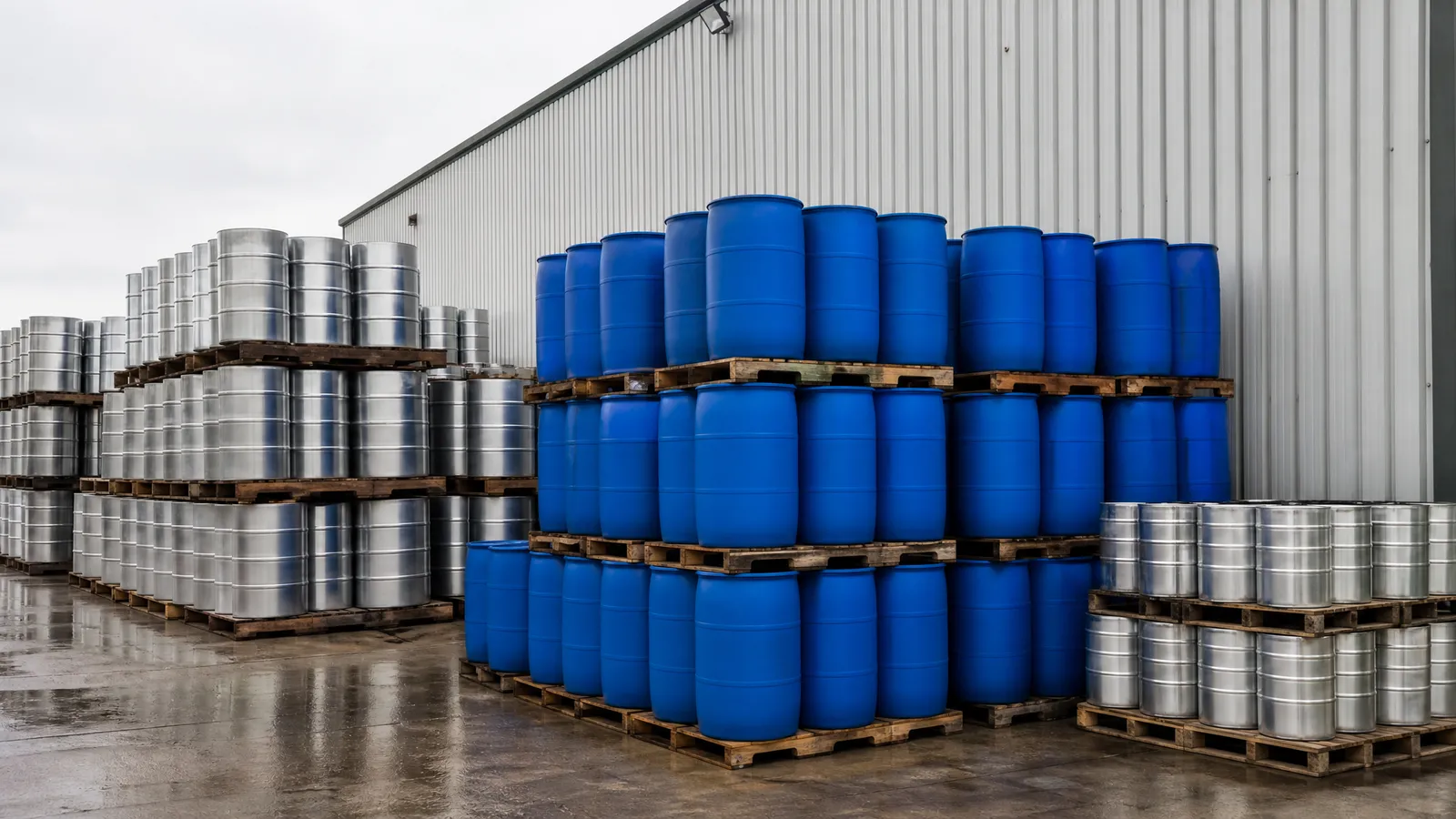
Empty chemical containers can be hazardous waste, but not always. Under the Environment Agency's waste classification guidance, a container that has been properly emptied is classified as packaging waste, and it is hazardous if any residue or contamination on it has a hazardous property. A container that is not empty is classified by its contents instead. This guide explains how that works for businesses that produce or hold used drums, tins, bottles and intermediate bulk containers (IBCs).
How waste packaging is classified
Waste classification in England, Scotland and Wales is explained in Technical Guidance WM3, often shortened to WM3. Its Appendix A sets out the List of Waste codes, also known as EWC (European Waste Catalogue) codes, and gives worked examples for common wastes. One of those examples covers packaging waste and its contents.
WM3 explains that two decisions are needed:
- whether the waste is packaging waste or waste contents
- if it is packaging waste, which packaging code applies
WM3 also makes a legal point about where these codes sit. Packaging waste cannot be classified under the municipal waste sub-chapter 20 01, because the title of that sub-chapter excludes packaging. Waste packaging belongs in sub-chapter 15 01.
The chapter 15 packaging codes
Chapter 15 of the List of Waste covers waste packaging, absorbents, wiping cloths, filter materials and protective clothing. The packaging codes listed in WM3 are:
- 15 01 01 paper and cardboard packaging
- 15 01 02 plastic packaging
- 15 01 03 wooden packaging
- 15 01 04 metallic packaging
- 15 01 05 composite packaging
- 15 01 06 mixed packaging
- 15 01 07 glass packaging
- 15 01 09 textile packaging
- 15 01 10* packaging containing residues of or contaminated by hazardous substances
- 15 01 11* metallic packaging containing a hazardous solid porous matrix (for example asbestos), including empty pressure containers
An asterisk at the end of a code means the waste is hazardous. In WM3, 15 01 01 to 15 01 09 are absolute non-hazardous entries, and 15 01 10* and 15 01 11* are absolute hazardous entries. Absolute and mirror entries are a wider subject, and this guide only touches on them where they affect packaging.
What "empty" means in the guidance
The first question is whether a container is empty at all. WM3 states that for a container to be classed as packaging waste it must be effectively "empty".
Often this is obvious. WM3 gives the example of a half empty tin of solidified paint, which is not empty. Where only a small amount of material remains, the container is still not empty if that residual material can be removed by physical or mechanical means applying normal industry standards or processes. In other words, all reasonable efforts must have been made to remove any left-over contents.
WM3 adds two further points:
- if the design of the packaging, its opening or the sticky nature of the material means it cannot be emptied, it is not packaging waste
- where containers are washed to make them empty, other requirements come into play, such as consent for any discharge of washings to foul sewer and a suitable authorisation for treating waste
When a container is not empty
If a container is not empty, it is not packaging waste. It is classified on the basis of its contents and the source or activity that produced it. The example given is 08 01 11*, waste paint and varnish containing organic solvents or other dangerous substances.
This is why part-used tins of paint or drums with liquid still in them are classified by what they contain rather than as packaging. Our pages on paint disposal and solvent disposal cover these wastes in more detail. The Safety Data Sheet (SDS) for the original product is often the starting point for describing what is inside.
How residues decide the code for empty packaging
Once a container is empty, WM3 asks whether the packaging is contaminated or contains any residue, and whether that residue contains hazardous substances.
Residues with a hazardous property
The residue or contamination is assessed on its own, excluding the weight of the packaging, to see whether it displays a hazardous property. If it does, the empty packaging is classified as 15 01 10*, which is an absolute hazardous entry.
WM3 gives two examples:
- an empty drum of diesel fuel containing any quantity of residual diesel, because diesel is hazardous and has a range of hazardous properties
- an empty paint can, labelled with "category of danger" symbols, containing dried residues of a paint that contained ecotoxic heavy metals
In the second example, drying can increase the concentration of other hazardous substances as water or solvent evaporates. A small amount of residue is therefore still assessed on its own properties. Our page on fuel disposal covers diesel and other fuels.
No residue, or a non-hazardous residue
The appropriate non-hazardous packaging code (15 01 01 to 15 01 09, according to the container material) applies to empty packaging if:
- residues and contamination are absent, or they do not have a hazardous property, and
- the container itself is not made of a hazardous solid material
Packaging made of a hazardous material
Some packaging includes a hazardous solid material in its construction. One example is some old fireproof packaging that may contain asbestos. In that case the packaging is classified as 15 01 11*, which also covers empty pressure containers.
What GOV.UK's summary guidance says
GOV.UK's shorter guidance on packaging waste and recyclables gives the same picture in table form. Containers must be empty to be classified as packaging waste. Empty packaging contaminated with residues of hazardous substances, with examples including paint cans, IBCs and drums, is listed as hazardous under 15 01 10* whatever the container is made of. Empty packaging contaminated with residues of non-hazardous substances takes the non-hazardous code for its material, such as 15 01 02 for plastic or 15 01 04 for metal.
WM3 also notes that an industry working group has been considering other approaches to classifying waste packaging, and that the worked example applies until it is amended.
Who is responsible for the classification
The waste producer is responsible for classifying the waste correctly, including empty containers. The answer depends on what the container held, whether it is empty in the sense WM3 describes and what residue remains. Where a container's history or contents are unclear, speak to our team rather than guessing.
To discuss your waste, contact our team on 0845 366 9306 or email enquire@hazardousdisposal.co.uk.
This article is for general information only and does not constitute professional, legal or chemical advice. Waste producers are legally responsible for correctly classifying their waste. For guidance on your specific waste, please contact our team.