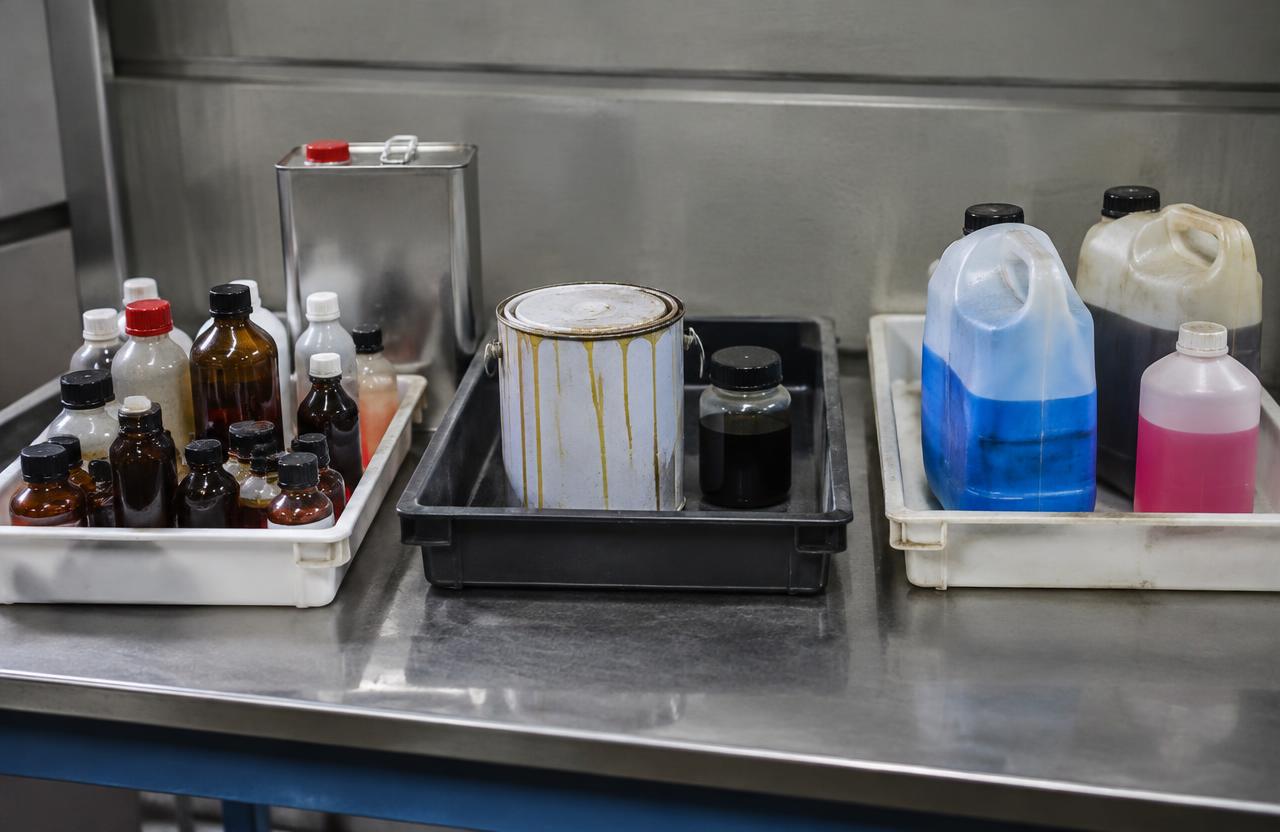
What are common examples of chemical waste?
Common examples of chemical waste include acetone, ethanol, isopropanol, cyanide-bearing material, fertiliser, waste oil, antifreeze, AdBlue, paint and bulk liquid waste. They arise in laboratories, workshops, factories, schools, healthcare settings and other commercial sites.
A product name does not determine the final waste classification. The GOV.UK waste classification guidance explains that the composition, source and properties of the waste are used to assign the correct List of Waste code.
1. Acetone waste
Acetone waste can arise from cleaning, manufacturing, laboratory and finishing processes. It may be held as unused product, spent solvent or a mixture containing residues from the process in which it was used.
The product Safety Data Sheet (SDS) and the composition of the spent material support its classification. Our acetone waste disposal service covers one-off and repeat commercial collections.
2. Ethanol and alcohol-water mixtures
Ethanol waste can come from laboratories, distilleries, manufacturing, cleaning and healthcare activities. The strength of the alcohol and the substances mixed with it affect the waste description.
Chemical Disposal requires the SDS and an assigned European Waste Catalogue (EWC), or List of Waste, code before quoting for collection.
3. Isopropanol waste
Isopropanol, often shortened to IPA, is used in electronics, optics, printing, laboratories and manufacturing. Waste streams may include liquid IPA and materials contaminated during the same process.
The contents and waste code must be confirmed for each stream. This allows the receiving site and transport requirements to be checked before collection.
4. Cyanide-bearing waste
Cyanide-bearing waste can arise from metal finishing, electroplating, laboratories and legacy chemical stocks. It requires a specific, evidence-based description because the concentration and other substances present affect classification.
Chemical Disposal cannot accept cyanide-bearing material described only as unknown. Our cyanide disposal service begins with a review of the SDS, EWC code, quantity and available composition information.
5. Waste fertiliser
Waste fertiliser may include unwanted product, damaged stock, off-specification material or residues from agricultural and grounds maintenance operations. Different formulations have different properties, so the product identity and composition are important.
Official classification is based on the waste itself. Brand names and general descriptions such as fertiliser are not a substitute for an assigned waste code.
6. Waste oil
Waste oil includes oils used in engines, hydraulic systems, gearboxes, machining and other industrial equipment. Water, fuel, coolant or process residues may alter the description of a particular load.
The Environment Agency guidance on waste oil provides official information relevant to businesses that store oil in England. Collection details still depend on the specific waste stream and its assigned code.
7. Antifreeze and glycol waste
Antifreeze and glycol waste can arise from vehicles, heating and cooling systems, chillers and industrial processes. Used material may differ from the original product because of dilution or contamination during service.
Its SDS, source process and assigned EWC code are needed to describe the waste for collection.
8. AdBlue and urea solution
AdBlue can become waste as unused stock, off-specification material or contaminated solution. It is commonly found at fleet depots, workshops, dealerships and distribution sites.
The collection assessment considers the product information, contamination where known, quantity and container type.
9. Paint and coating waste
Paint waste can include unused products, production residues, coatings, thinners, aerosols and contaminated packaging. Water-based and solvent-based products may have different classifications.
The GOV.UK hazardous waste guidance explains the documentation required when hazardous waste moves. Each paint-related stream must be described accurately rather than grouped under a general label.
10. Bulk liquid chemical waste
Bulk liquid chemical waste includes process liquids, wash waters, tank residues and mixed liquids held in intermediate bulk containers or fixed tanks. The identity and composition of the liquid determine whether a collection can be quoted.
Where the waste is not sufficiently identified, testing or analysis may be arranged by agreement. Collection can only proceed once the waste has been identified and classified.
What is required before chemical waste collection?
Chemical Disposal requires an SDS for each product or substance and an assigned EWC code for every waste stream before quoting or collecting. The quantity, container type, collection address and photographs provide the remaining collection details.
The Environment Agency’s WM3 waste classification guidance is the main technical reference for waste classification. Unidentified or unknown chemicals cannot be accepted for collection.
Discuss your chemical waste collection
To discuss one or more of these chemical waste examples, contact the Chemical Disposal team with the SDS and assigned EWC code for each stream. We can review the information and explain the next stage of the collection enquiry.
This article is for general information only and does not constitute professional, legal or chemical advice. Waste producers are legally responsible for correctly classifying their waste. For guidance on your specific waste, please contact our team.